Build awareness
Promote gender sensitivity through education, orientation, and regular awareness activities.

Learn about the committee, its work, and how to reach support at Sikkim Alpine University.
The Internal Complaints Committee (ICC) is SAU’s formal channel for receiving and addressing complaints of sexual harassment. Its remit includes students, teaching and non-teaching staff, employees, and visitors to the university.
The committee is constituted under the Sexual Harassment of Women at Workplace (Prevention, Prohibition and Redressal) Act, 2013 and the UGC Regulations, 2015 on prevention and redressal of sexual harassment in higher education.
Its work supports a campus culture grounded in gender equality, fairness, and dignity.
Promote gender sensitivity through education, orientation, and regular awareness activities.
Communicate the university’s expectations and apply its policies against sexual harassment.
Address complaints through a confidential, impartial process that respects everyone involved.
The committee’s responsibilities combine complaint handling with prevention and campus-wide education.
Receive concerns from women employees, faculty members, students, and other staff.
Review complaints through a due-process inquiry, maintaining confidentiality and impartiality.
Make recommendations to university authorities based on the inquiry’s findings.
Conduct training and awareness sessions on gender equality, workplace conduct, and prevention of sexual harassment.
Encourage preventive practices so every person can take part in campus life safely and with respect.
The Act covers unwelcome conduct of a sexual nature, whether physical, verbal, or non-verbal. Examples include unwanted physical contact or advances, requests for sexual favours, sexually coloured remarks, and showing pornography.
Conduct may also be harassment when it affects someone’s work or academic participation, or creates an intimidating, hostile, or offensive environment.
Roster as listed on the university’s published ICC page. Contact the university to confirm current appointments.
| Name and designation | Committee role |
|---|---|
| Dr. Nirjala Rai Assistant Professor, Department of Geography | Presiding Officer |
| Dr. Sunila Gurung Assistant Professor, Department of Nepali | Member |
| Ms. Pema Tamang Assistant Professor, Department of Commerce | Member |
| Ms. Nisha Chhetri Assistant Professor, Department of English | Member |
| Mr. Bivek Subba Assistant Professor, Department of Geography | Member |
| Ms. Deepika Limboo Office Secretary | Member |
| Mr. Tulshi Chettri Marketing Assistant | Member |
| Ms. Zeba Noor Ansari Social Worker | External Member |
| Ms. Smyrna Lepcha MA, Department of History | Student Representative |
| Ms. Geetal Hangma Limboo MSc, Department of Botany | Student Representative |
| Mr. Solom Tshering Lepcha MA/MSc, Department of Geography | Student Representative |
Complaints, proceedings, and recommendations are managed sensitively, with respect for the dignity and privacy of the people involved.
VIEW THE ICC POLICY ↗SAU employees, faculty, staff, and students may submit the complaint form or contact a committee member.
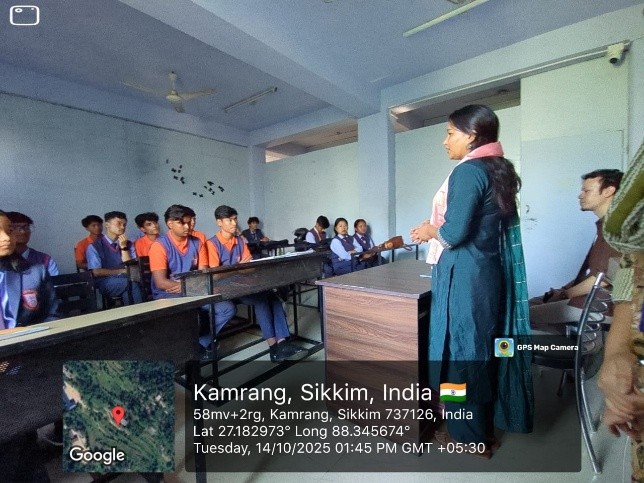
Open complaint form ↗ Email ICC[email protected]SAU’s published activity report describes an ICC awareness and induction programme guided by the Equal Opportunity Cell (EOC), with a focus on gender equality, anti-discrimination, and how to seek support. The report also refers to UGC guidance letter D.O. No. 91-1/2024 (CS), dated 30 May 2025.
Shared POSH policy information and complaint-process notices on campus noticeboards.
Placed awareness posters at both university campuses.
Posted ICC member names and contact information where the community can find them.
Displayed Women’s Helpline 181 and Emergency Response Support 112.
Engaged students on a safe, inclusive, and gender-just learning environment.


Fill out the form below to start your application process